

Bloom by Elladee · Brisbane Bayside
Puberty Courses & Counselling for Girls, Brisbane Bayside
These conversations don't happen once; they happen over years. We help you start. Nurse-led, parent-and-daughter puberty workshops on periods, changes and confidence, so the talk keeps going at home.
Nurse-led · evidence-based · a lot less daunting than it sounds
Period education for girls, and the grown-ups who love them
Bloom is Elladee's younger sister: the same two registered nurses, the same warmth and honesty, made just for girls on the cusp of puberty. First periods, changing bodies, big feelings: covered together, so nobody has to figure it out alone.
Parent & daughter workshops
Choose your workshop
Each workshop is for a girl plus one trusted adult. Small groups, take-home resources, and a room that's warmer and funnier than you'd expect.
What's Coming
Everything before her first period: what's coming and why, so it arrives as a milestone, not a surprise. Each pair takes home an emergency period kit.
- What happens and when
- Periods, hygiene & feeling prepared
- Take-home emergency period kit
- Small groups, so real questions get asked
In the Thick of It
For girls already in it: cycles, day-to-day period management, moods, cramps and confidence. Practical tools for the real, messy middle. Each pair takes home a workbook.
- Managing cycles day-to-day
- Moods, cramps & confidence
- Take-home workbook
- Small groups, so real questions get asked
Upcoming dates
Pick a date and book
Straight from our booking calendar, always up to date. Tickets and prices are on TryBooking.
Why parent + daughter together?
Because the conversation doesn't end at the door
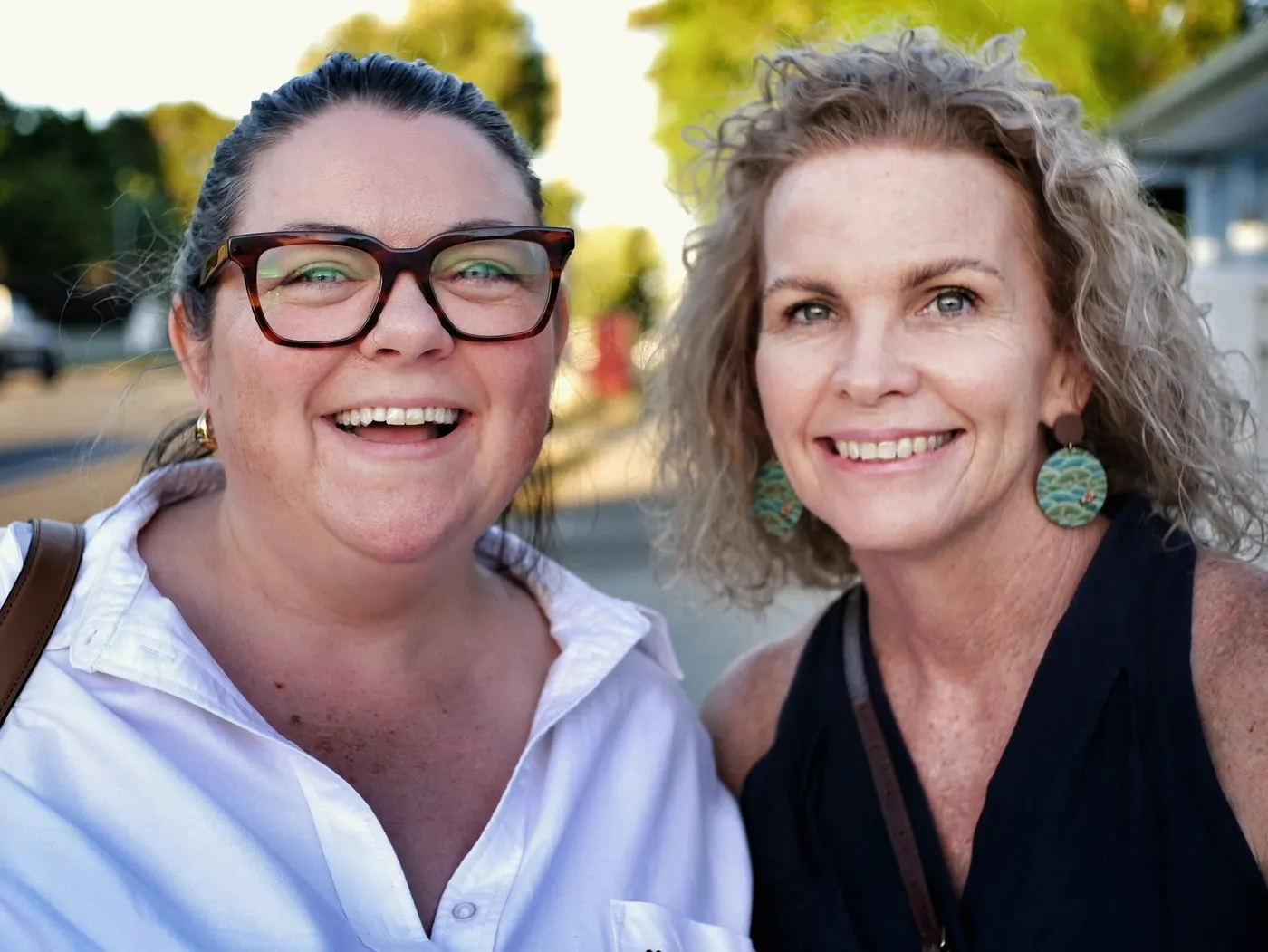
When you learn it together, you build a shared language for everything that comes after. She hears it from a nurse and from you, and you've both got the same words for the next question, at home, months later.
It's nurse-led, evidence-based, and honestly? A lot less daunting than it sounds. Most parents tell us the drive home is the best chat they've had in ages.
Find a workshopOne-on-one
Prefer a private chat? Puberty counselling 1:1
Some questions are easier one-on-one. Book a private, nurse-led session for you and your daughter to talk things through at your own pace.
Book a 1:1 sessionSchools, P&Cs & groups
Want this for your school, P&C, or group of friends?
We run Bloom workshops for schools, parent groups and friend groups across the Brisbane Bayside. Tell us your group and we'll tailor a session.
Get in touchFree resources
Factsheets to take home
Nurse-written guides you can read on screen or print out. Free to download, and free to share with another parent who needs them.
Kind words
What parents say
“Highly recommend Bloom by Elladee for your tween daughters. My two girls loved learning about their bodies in a fun way, and I love that Ellen and Dee can do the tricky conversations so well. It’s age appropriate, empowering and exactly what was missing from my millennial teenage years.”
“We went to this today and it was really good. Highly recommend and wish it was available in schools. Ellen and Dee were so knowledgeable and gave everyone a calm, respectful and friendly space to ask all the awkward questions. It generated so much chatter all afternoon. Thanks guys for bringing this to our community.”
FAQ
Bloom: your questions
Is she ready? Is she too young? Too old?
The most common worry we hear is about timing, in both directions.
Bloom is built for girls roughly 9 to 12, which is deliberately before most of the changes begin. Knowing what's coming is far less unsettling than being surprised by it. If your daughter hasn't started developing yet, she's exactly who the session is designed for.
If she's already well into puberty, she'll still get something out of it, but our sessions for older girls may suit her better. Email us if you're unsure and we'll help you pick.
Nothing's happening yet. Should I be worried?
Almost certainly not. Puberty starts across a wide window, and girls in the same class can be years apart from one another without anything being wrong.
Breast development is usually the first visible sign. Periods typically follow somewhere around two years later, though this varies a great deal between individuals.
If you're genuinely concerned about the timing (either very early changes, or no signs by the mid-teens) that's a conversation for your GP rather than something to sit with.
What's covered?
Periods and the menstrual cycle, the changes of puberty, managing cramps and moods, hygiene, and how to keep the conversation going at home. Each pair leaves with a take-home kit or workbook.
Why does a parent stay in the room?
Because the session isn't only for her.
Schools deliver puberty education to the girls alone, which leaves parents guessing at what was covered. Bloom is built as a shared experience: you both hear the same information at the same time, from the same person, which means the conversation afterwards starts from common ground rather than from a reconstruction.
It also means you can see how she reacted: what landed, what she went quiet at, what she'll want to come back to.
How is this different from what she'll get at school?
Two things: the group is much smaller, and it's delivered by nurses rather than teachers.
Smaller groups mean real questions get asked. Nurse educators mean the answers are clinically accurate and delivered by someone for whom this is unremarkable, everyday material. That is, in itself, reassuring for a girl who suspects her body is doing something strange.
There's no school vibe. That's intentional.
What if she's embarrassed?
Completely normal, and exactly why doing it together, with a nurse leading, works so well. The room is warm, funny and judgement-free, and most girls relax within the first ten minutes.
Her dad, stepdad or grandparent wants to be across this too
Please forward them the take-home materials. It genuinely helps when everyone in a child's life is using the same words, particularly across two households.
Any adult who'll be a support to her is welcome in the room at a Bloom session, not just mothers. The workshop is for a girl plus one trusted adult; it doesn't have to be a parent.
What should she have in her bag?
A small zip pouch with a pad and a spare pair of underwear, packed well before she needs it. The point is that it's already there and already normal, rather than something urgently assembled on the day.
It's also worth her knowing which staff member at school she'd go to, and where the school keeps supplies. Most schools have them at the office or with the school nurse.
What if it happens at school and she panics?
Talk the plan through once, calmly, well ahead of time: where to go, who to ask, what's in her bag. Rehearsed once, it stops being an emergency and becomes a procedure.
It's worth saying out loud that if it does happen unexpectedly and messily, that's ordinary and has happened to almost everyone. The fear is usually about embarrassment rather than the event itself.
She didn't say a word the whole session. Did she get anything out of it?
Yes. Quiet almost always means absorbing.
Girls this age rarely process new information out loud, especially in front of a parent and a room of peers. What matters is that she now has accurate words for things, and knows she's allowed to use them.
The advantage of you having been in the room is that you don't have to reconstruct what she heard. You can refer back to it directly (“remember what the nurse said about...”) without her having to explain the context first.
How do I keep the conversation going without making it a Big Talk?
Short and often works far better than long and formal.
The most useful conversations tend to happen side-by-side rather than face-to-face: in the car, walking the dog, folding washing, waiting for something. There's no eye contact to manage, and either of you can let the subject drop without it being awkward.
You're not aiming to cover everything. You're aiming to be the person she comes back to.
What if she asks something I don't know the answer to?
“That's a good question, let's find out” is a completely legitimate answer, and it teaches her something more valuable than the fact itself.
You're also welcome to email us. We'd much rather answer it than have it go unanswered.
When should we see a GP?
Most of what happens in puberty needs no medical input at all. Worth booking an appointment if:
- Changes begin unusually early
- There are no signs of development by the mid-teens
- Periods are heavy or painful enough to interfere with school, sleep or activities
- Something is worrying her, or you, enough that it's taking up space
Pain that stops a girl doing what she'd normally do is worth taking seriously rather than waiting out.
What's the refund policy?
Refund and transfer terms are shown at checkout on TryBooking. If plans change, get in touch and we'll do our best to help.
Still have a question?
Email us. We answer everything, and nothing is too small or too awkward.
Let's help her bloom
Book a parent-and-daughter workshop, grab the free checklist, or ask us anything. Nurse-led, warm, and refreshingly real.